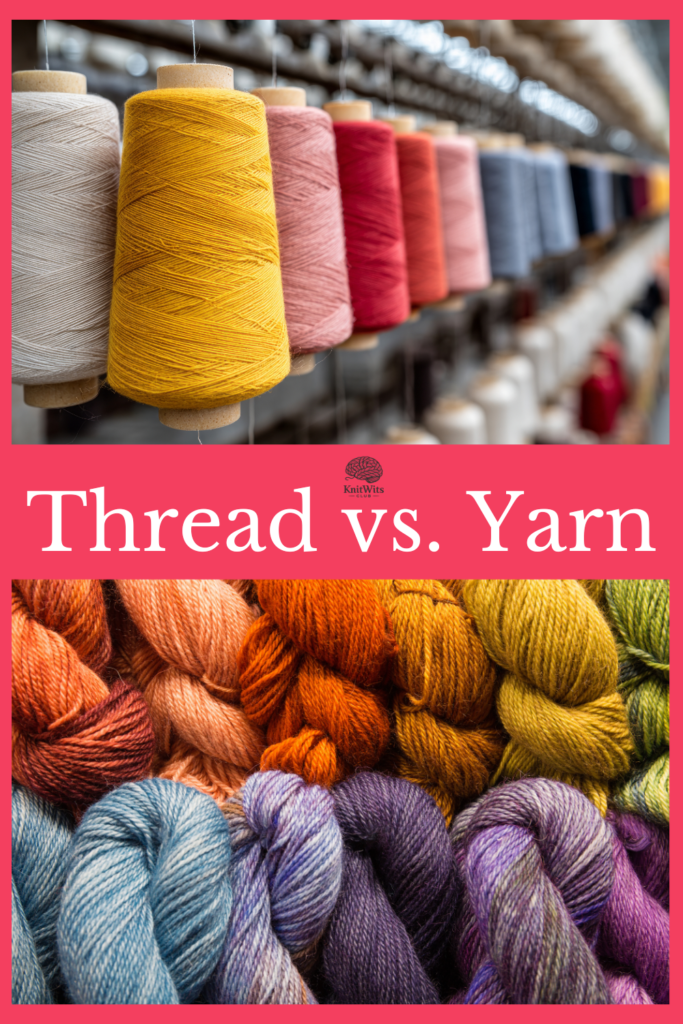
Thread vs Yarn: What’s the Main Difference and When Each One Matters
Heads up: This post may include affiliate links. If you click and buy, I may earn a small commission. It helps keep the yarn stash stashworthy.
At first glance, thread and yarn can look interchangeable. They’re both long, flexible strands made from fibers. They both come on spools or in skeins. So if you’re new to fiber crafts, it’s a common question to ask whether you can substitute one for the other.
The short answer is no.
The longer, more useful answer is that thread and yarn serve different purposes, behave differently, and produce very different results depending on the project.
Understanding the difference between thread vs yarn helps you choose the right material from the start. It also helps you avoid frustration and end up with fabric that actually does what you want it to do.
The main difference between thread and yarn
The main difference between thread and yarn is function.
Thread holds fabric together.
Yarn becomes the fabric.
That distinction shapes everything else. Thickness, twist, fiber choice, strength, elasticity, and how each material interacts with tools like needles, hooks, and sewing machines all flow from that core difference.
In practice, thread stays smooth, thin, and strong for its size. Yarn, on the other hand, stays thicker and loftier, and it’s built to create structure and warmth across larger areas.
How yarn is made and why it behaves the way it does
Yarn is an assemblage of fibers spun together into a continuous strand. Those fibers may be natural or synthetic. Makers choose them for qualities like softness, elasticity, warmth, and durability.
Common types of yarn include:
- cotton yarn
- wool yarn
- acrylic yarn
- blended fibers
Yarn can use staple fibers, which are short fibers spun together, or filament yarn, which relies on long, continuous fibers. Because of that, the spinning method affects strength, texture, and how the fabric drapes.
Yarn also comes in different weights, from lace weight yarn all the way up to bulky. As a result, knitters and crocheters can use yarn for everything from intricate designs to large home décor projects.
How thread is different by design
Thread is much thinner and more tightly twisted than yarn. Manufacturers engineer it for precision and strength, not bulk.
There are many different types of thread, including:
- sewing thread
- embroidery thread
- cotton thread
- polyester thread
- nylon thread
- core-spun thread
Each type of thread serves a specific purpose. Sewing thread passes smoothly through fabric and a sewing machine. Embroidery thread works best for decorative surface details. Crochet thread, while thicker than sewing thread, still behaves like thread in finished fabric.
For consistency and strength, manufacturers often make thread from synthetic fibers or tightly processed natural fibres.
Yarn vs thread in specific projects
One of the easiest ways to understand thread vs yarn is to compare how they perform in real projects.
Yarn works best for:
- knitting projects
- crochet projects
- garments
- blankets
- scarves
- hats
- larger projects where warmth, texture, or structure matters
Thread works best for:
- sewing seams
- repairing garments
- embroidery
- decorative stitching
- detailed work on delicate fabrics
You can knit with sewing thread. However, it creates extremely stiff fabric and requires a level of patience most people don’t enjoy. Likewise, sewing with yarn leads to bulky seams and uneven tension.
Cotton yarn vs cotton thread
This is where confusion often creeps in, because both materials may be labeled “cotton.”
Cotton yarn uses cotton fibers spun into a thicker strand designed to create fabric. Knitters and crocheters often use it for dishcloths, summer garments, and home décor items.
Cotton thread stays much thinner and smoother. Its job is stitching fabric together, not building fabric itself.
Cotton crochet thread sits somewhere between the two. It’s thicker than sewing thread but still far thinner than yarn. Because of that, it works well for lace, doilies, and detailed crochet work.
Thickness, flexibility, and the desired outcome
Thickness directly affects the final result, whether you’re using yarn or thread.
Yarn:
- creates visible stitches
- traps air for warmth
- stretches and recovers depending on fiber
- works well for flexible fabrics
Thread:
- creates minimal bulk
- emphasizes precision
- holds shape rather than creating it
- excels in detailed or structural work
So choosing the right material means thinking about the desired outcome, not just what’s sitting in your stash.
Natural fibers vs synthetic materials
Both yarn and thread come from a wide variety of materials.
Natural materials like wool, cotton, and silk offer breathability and texture. Synthetic fibers, meanwhile, offer durability, consistency, and strength.
In the textile industry, manufacturers choose between natural fibers and synthetic material based on performance needs. The same logic applies at the craft level.
The right material isn’t about what’s “better.” Instead, it’s about what works best for the job.
Why yarn and thread aren’t interchangeable
At first glance, substituting one for the other seems reasonable. After all, they’re both strands.
But yarn and thread handle different stresses, tools, and outcomes. Yarn responds to knitting needles and crochet hooks. Thread moves smoothly through fabric and machinery.
When you use the wrong material, frustration follows. Broken fibers, uneven tension, and finished pieces that don’t hold up over time become far more likely.
Final thoughts on thread vs yarn
Thread vs yarn isn’t a debate about superiority. It’s about function.
You wouldn’t normally sew with yarn. You also wouldn’t usually knit or crochet with thread.
Then again, that rule falls apart when you need to join knitted or crochet pieces together. At that point, using the same yarn as the project almost always works best.
Clear as mud? Exactly.